Layer 04, Fossil Lake
Fossil Butte National Monument: A Visitor Guide
Fifty-two million years ago this dry sagebrush country was a warm, wet lake basin, and its fish settled into fine mud that became stone. Fossil Butte National Monument keeps part of that world on display.
What is Fossil Butte National Monument
Fossil Butte National Monument is a unit of the National Park Service in south-western Wyoming. Congress created it by law on 23 October 1972 to protect outstanding paleontological sites and related geological features. The monument covers 8,198 acres of the Green River and Wasatch formations, and its purpose is to safeguard a rare assemblage of animals and plants that lived in and around Fossil Lake.
The park is near Kemmerer, the county seat of Lincoln County. WyoHistory.org describes the turnoff as north of US Highway 30, about 12 miles west of Kemmerer. The light-coloured Green River rock is exposed on slopes such as Fossil Butte, Cundick Ridge and Ruby Point.
How old are the fossils?
The National Park Service gives the age of Fossil Lake as about 52 million years, in the Eocene epoch. Other sources round the figure to around 50 million years, which is the same time period. Warm, wet conditions then supported a freshwater lake with subtropical surroundings, and layers of fine sediment settled on the bottom and preserved animals in extraordinary detail.
What was found here
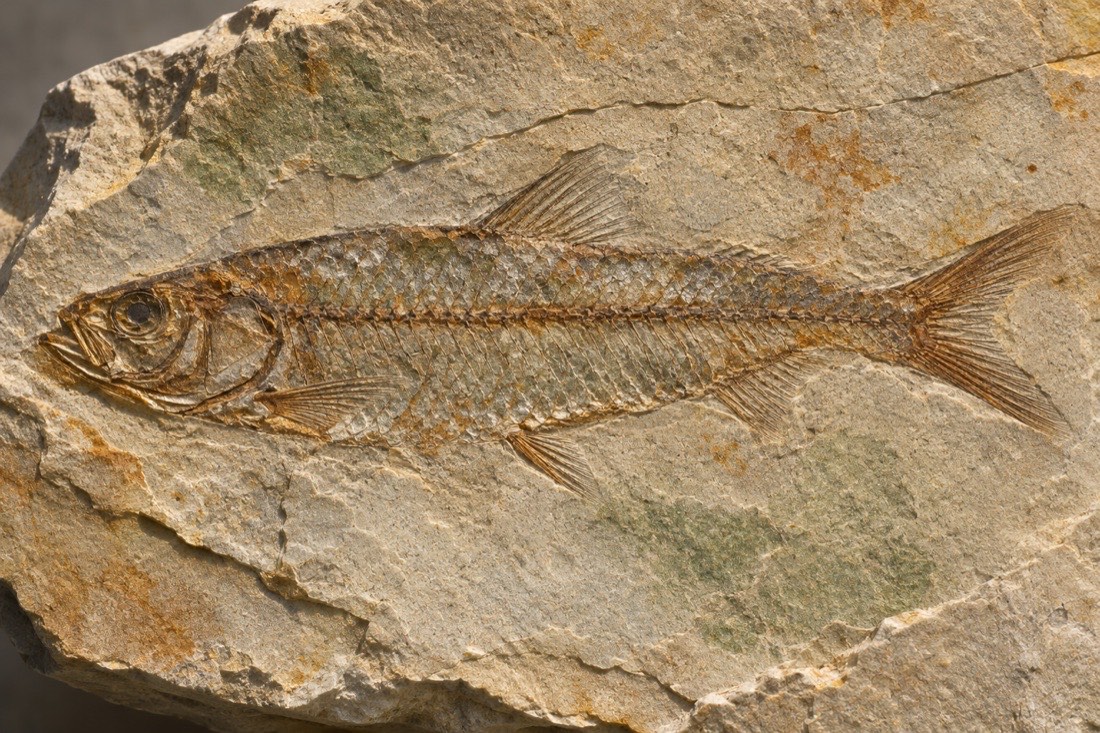
The monument is known for some of the best-preserved fossils in the world. Finds include stingrays, turtles, early horses and frogs. The most common fossil fish is Knightia eocaena, a small herring-like fish. WyoHistory.org describes Knightia as Wyoming's state fossil and as the most abundant vertebrate fossil in the world. The lake's upper waters were home to plankton-feeding herring, while larger predators such as gar and a variety of catfish and freshwater rays lived alongside them.
Is it worth visiting
Yes, if you like natural history, if you travel with curious children, or if you want a quiet stop that has real substance. It is not a big park with long trail networks, and many visitors spend a half day here. We suggest planning about two hours for the visitor center and a drive or short walk, and longer if you join a ranger program or want a picnic. If you only have time for one place in Lincoln County, this is the one we would choose, and our overview of more things to do shows how to combine it with other stops.
How long to spend at Fossil Butte
This is our suggestion rather than an official figure: allow 60 to 90 minutes in the visitor center if you read the displays, and add another hour for the scenic drive and the Nature Trail in the warm months. In winter, when the scenic drive is closed, an hour or so is usually enough.
Visitor center and trails
The visitor center is the heart of any visit. More than 2,000 fossils are on display, covering fish, insects, plants, reptiles, birds and mammals from Fossil Lake, and prepared specimens can be viewed in person. In summer, rangers run programs that include fossil preparation demonstrations and drop-in activities.
Hours and seasons
The park itself is open from sunrise to sunset all year. Visitor center hours depend on the season, according to the National Park Service page that was current when we wrote this guide:
- Spring (1 May to the Thursday before Memorial Day): daily, 8:00 am to 4:30 pm.
- Summer (the Friday before Memorial Day through Labor Day): daily, 8:00 am to 5:30 pm.
- Fall (the day after Labor Day through 31 October): daily, 8:00 am to 4:30 pm.
- Winter (1 November to 30 April): Monday to Saturday, 8:00 am to 4:30 pm, closed on Sundays and some holidays.
Hours change, so confirm them on the National Park Service website before you go. The entrance road gate closes only in severe winter storms.
Trails and the scenic drive
Visitors can use hiking trails, dirt roads and a scenic drive to see the geology, wildlife and scenery. The scenic drive gives views over the valleys below, reaches the picnic area and the Nature Trail, and provides access to several unmaintained hiking trails. It is closed from November until late May depending on the weather. If you are searching for a Fossil Butte National Monument hike, the National Park Service does not list trail lengths on its main pages, so ask a ranger at the visitor center for current conditions and route advice. For a map, collect the park brochure at the visitor center.
Camping
There is no camping and no food service inside the monument. The National Park Service says that camping is permitted on adjacent Bureau of Land Management land, and the visitor center can provide a map. Nearby communities also have campgrounds.
Fossils: what you can and cannot do
Can you dig for fossils at Fossil Butte?
No. All fossils in the national monument are protected, and collecting fossils or any other natural or cultural item is prohibited under federal regulation 36 CFR 2.1. That includes rocks, antlers and plant material. Fossils can be viewed in the visitor center. The monument's own quarries are worked by park staff and volunteers on a limited basis.
Where can you legally dig?
The National Park Service notes that some commercial quarries on nearby state and private land charge a fee to let visitors dig. A commercial quarry on state land has operated near the monument since 1943, according to WyoHistory.org. Commercial collecting grew from the late nineteenth century, when Robert Craig began quarrying in 1897. Always work with a licensed operator and follow the rules for the specific land you are on. Some visitors search for a Fossil Lake safari or similar guided digging experience; if you do, check what the operator is allowed to do and whether you may keep what you find.
Getting there and nearby towns
Most visitors approach from Kemmerer, taking US Highway 30 west and then turning north towards the monument entrance. Diamondville is next door to Kemmerer, and the other small towns of the south-east, such as Opal and Cokeville, are further away. For a longer trip you can pair the monument with the outdoors of western Lincoln County, which is explained in our Star Valley outdoors guide.
Kemmerer has the lodging, food and fuel that the monument lacks, so most people stay there. Read our guide to the towns in Lincoln County, which describes Kemmerer and its neighbours, and see the history of the area for the story of the coal and fossil industries that shaped it.
A final reminder: this website is an independent guide and is not run by the National Park Service. For fees, closures and road conditions, use the official National Park Service pages.